Guides / Planning
Article 4 directions in London: what they mean for you
An Article 4 direction removes some permitted development rights in an area, so work that would normally be allowed needs a planning application.
Checked October 2026. General guidance for England, not advice for a particular property.
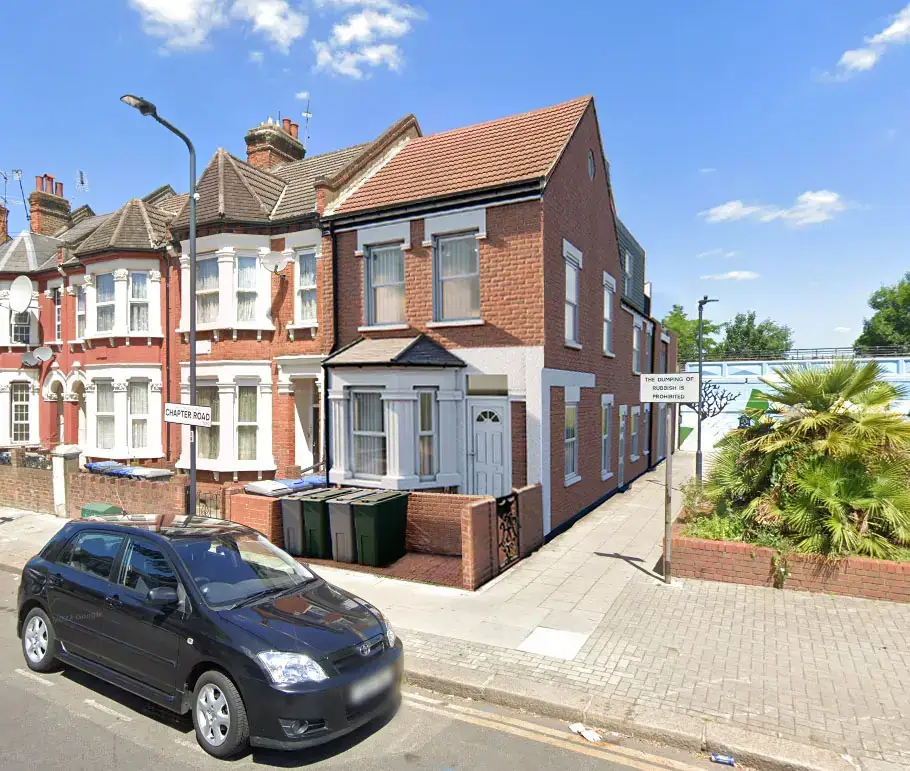
Permitted development rights apply across England, but councils can switch some of them off locally. They do this with an Article 4 direction, named after article 4 of the General Permitted Development Order 2015. Many London boroughs use them.
What a direction does
A direction doesn't ban the work. It means you need planning permission for something that would otherwise be permitted development. The council then judges the application on its merits, against its local plan.
A direction can cover a whole borough, a defined area such as a conservation area, or a single site. It can remove one class of permitted development or several.
How a direction is made
- The council publishes a notice locally, puts up site notices and, in most cases, notifies owners and occupiers.
- People have at least 21 days to comment.
- The council can only confirm the direction after considering the comments. It comes into force on a date at least 28 days after the comment period starts, and only if confirmed.
- Some directions, for example ones affecting householder work in a conservation area, can take effect immediately. These lapse after six months unless the council confirms them.
- The Secretary of State is notified and can cancel or modify a direction.
Common types in London
| Type | What it removes | What it means in practice |
|---|---|---|
| Houses in multiple occupation | Change of use from a house (Class C3) to a small HMO (Class C4) | Planning permission is needed to convert a family house into a small shared house |
| Conservation area householder directions | Selected Part 1 and Part 2 rights for houses, often on elevations facing a road | Planning permission is needed for things like replacement windows and doors, front boundary walls, roof changes or painting brickwork |
| Office and commercial to residential | Class MA, which allows Class E premises such as offices and shops to become homes through prior approval | A full planning application is needed for the conversion |
HMO directions are used by several London boroughs. Brent, for example, has a borough-wide direction (with some growth areas excluded) that has applied to C3 to C4 changes since 1 November 2022. HMO licensing is a separate regime under housing law.
Conservation area directions go further than the conservation area rules alone. Exactly which works are covered differs from one area to the next, so read the direction itself.
Class MA directions often target town centres, high streets and employment areas. National policy says these directions must be based on robust evidence and cover the smallest area possible. In February 2024, for example, the government cut back Brent's town centre direction to smaller areas because it considered it too broad.
How to find out if your home is affected
- Check your council's website, which should list the Article 4 directions in force.
- Read the conservation area page for your area, if you're in one.
- Check the planning history of the property. Rights can also be removed by a condition on an earlier planning permission, which has the same effect.
Our area pages set out council-specific points for each London borough.
What it means for an application
- A normal planning application is needed. For a house, that's usually a householder application. For an HMO or Class MA conversion, it's a full application for change of use.
- The usual fee applies. The old national exemption from fees for applications made necessary by an Article 4 direction was removed on 17 January 2018. Some council web pages still describe the old exemption, so confirm the fee with your council before applying.
- Work already approved may be protected. A direction doesn't affect development that received prior approval before the direction took effect, provided it is completed within three years of that approval.
- If you're unsure whether a project needs permission, a lawful development certificate gives you a legally binding answer.
Directions change, and new ones are consulted on regularly. Our free planning check covers whether a direction affects your property.
Sources
- GPDO 2015, article 4 (legislation.gov.uk)
- GPDO 2015, Schedule 3: procedures for article 4 directions (legislation.gov.uk)
- Planning fees regulations 2012, regulation 5 (omitted from 17 January 2018) (legislation.gov.uk)
- Explanatory memorandum to the 2017 fees amendment regulations (legislation.gov.uk)
- How can I find out if permitted development rights have been removed in my area? (Planning Portal)
- Brent HMO Article 4 direction public notice (Brent Council)
- Secretary of State modification of Brent's Class M and MA direction (gov.uk)
Related services
- Planning permission: We prepare and submit your application, deal with the planning officer, and keep you informed until there's a decision.
- Lawful development certificates: Lawful development certificates in London for permitted development extensions, lofts, outbuildings and porches, and for existing uses and work.
- Change of use: Applications to change the use of a building, such as shop to home or office to flats, including prior approval where it applies.
- Conservation areas and listed buildings: Listed building consent and conservation area applications in London: feasibility, heritage statements, traditional details and Article 4 alterations.
- HMO planning and licensing: HMO planning applications and licence drawing packs in London: conversion potential checks, Article 4 advice, layouts and building regulations.
Free consultation
Want us to check your house?
We'll look at the planning position for your address and tell you the simplest route, before any fee is agreed.
Request a fee proposal