Guides / Planning
What does living in a conservation area mean for my extension?
A conservation area doesn't stop you extending, but it removes some permitted development rights and raises the bar on design.
Checked October 2026. General guidance for England, not advice for a particular property.
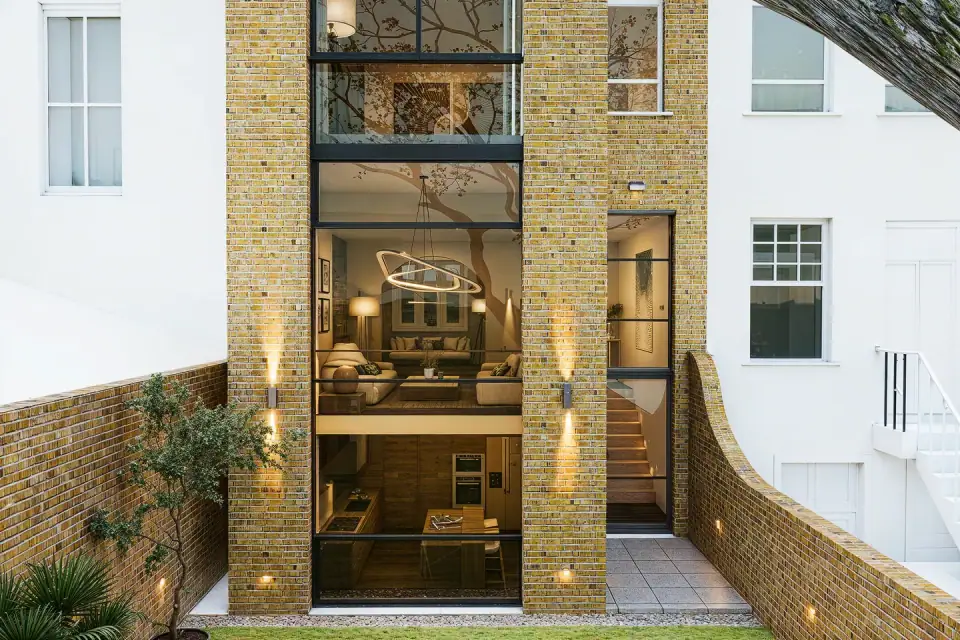
Large parts of London are in conservation areas (Richmond alone has 85): places of special architectural or historic interest whose character councils have a legal duty to preserve or enhance. If your house is in one, you can still extend it, but some work that would be permitted development elsewhere needs a planning application, and the council will look closely at design.
Which permitted development rights are reduced
Conservation areas are "article 2(3) land" in the General Permitted Development Order. That takes away or limits several householder rights:
| Type of work | Elsewhere | In a conservation area |
|---|---|---|
| Single-storey rear extension | Permitted development, within limits | Still permitted development, within the same limits |
| Side extension | Permitted development, within limits | Needs planning permission |
| Two-storey (or taller) rear extension | Permitted development, within limits | Needs planning permission |
| Cladding in stone, artificial stone, pebble dash, render, timber, plastic or tiles | Permitted development | Needs planning permission |
| Roof extension, such as a dormer | Permitted development, within limits | Needs planning permission |
| Outbuilding at the side of the house | Permitted development, within limits | Needs planning permission |
| Satellite dish on a chimney, wall or roof slope facing and visible from a road | Permitted development, within limits | Needs planning permission |
| Chimney, flue or soil pipe on a front or side wall or roof slope facing a road | Permitted development, within limits | Needs planning permission |
Some rights survive. A single-storey rear extension within the normal limits, rooflights that don't project too far from the roof slope, and outbuildings behind the house can still be permitted development, unless an Article 4 direction says otherwise. Our guide on how far you can extend without planning permission sets out the normal limits.
Flats and listed buildings are different again: flats don't have the householder rights to extend, and almost any change to a listed building needs listed building consent. See our heritage and listed buildings service.
Article 4 directions
Many London conservation areas also have an Article 4 direction. It removes specified permitted development rights, so work that would otherwise be allowed needs a planning application, and a fee may be payable. Each direction lists the rights it removes and the properties it covers, so check the exact wording for your street rather than assuming. A direction can't be used against work that has already started.
Demolition
You need planning permission for relevant demolition in a conservation area. That covers:
- demolishing a building of 115 cubic metres or more, or most of one
- demolishing a gate, fence or wall 1 metre or higher next to a road, footpath, waterway or open space, or 2 metres or higher elsewhere
Demolishing without permission when it's needed is a criminal offence. This replaced the old "conservation area consent".
Trees
Trees in a conservation area are protected even without a Tree Preservation Order. Before cutting down, topping or lopping one you must give the council six weeks' notice (a "section 211 notice"). This gives the council time to decide whether to protect the tree with an Order. Notice isn't needed for small trees, under 75 mm in trunk diameter measured 1.5 metres above the ground. Doing the work without notice is an offence.
If your extension or outbuilding is near a tree, plan for this early. The six weeks can't be shortened unless the council agrees.
How to check if you're in a conservation area
- Look at your council's conservation area map or its online planning map. Most councils also publish a list of areas with boundary plans. Start from your borough on our area pages.
- Read the conservation area appraisal or statement for your area. It explains what makes the area special and often includes design guidance.
- Ask the council whether an Article 4 direction applies to your street.
Design expectations
When deciding an application in a conservation area, the council must pay special attention to preserving or enhancing the area's character or appearance. In practice, councils typically look for:
- extensions that are subordinate to the house, often set back or set down
- materials that match or complement the original, such as London stock brick, slate and timber windows
- keeping the front elevation and roofline intact, with dormers and roof terraces mainly at the rear
- respecting the rhythm of the street: gaps between houses, matching rear building lines and consistent roof forms
The appraisal for your area is the best guide to what the council will look for. A pre-application enquiry can be worthwhile for a larger or less conventional design.
If you think your work is still permitted development in a conservation area, a lawful development certificate confirms it before you build.
Not sure whether your house is affected? Our free planning check is a good place to start.
Sources
- The Town and Country Planning (General Permitted Development) (England) Order 2015, Schedule 2, Part 1
- GOV.UK: Permitted development rights for householders, technical guidance
- GOV.UK: When is permission required? (Article 4 directions)
- GOV.UK: Tree Preservation Orders and trees in conservation areas
- Planning Portal: Planning permission for relevant demolition in a conservation area
- Haringey Council: Trees in conservation areas
- Richmond Council: About conservation areas
- Planning (Listed Buildings and Conservation Areas) Act 1990, section 72
Related services
- House extensions: Drawings for every kind of house extension, from a kitchen side return to a double-storey rear extension, priced before we start.
- Loft conversions: Drawings for loft conversions of every type, with the stair, headroom and fire escape route worked out from the start.
- Planning permission: We prepare and submit your application, deal with the planning officer, and keep you informed until there's a decision.
- Lawful development certificates: Lawful development certificates in London for permitted development extensions, lofts, outbuildings and porches, and for existing uses and work.
- Conservation areas and listed buildings: Listed building consent and conservation area applications in London: feasibility, heritage statements, traditional details and Article 4 alterations.
Free consultation
Want us to check your house?
We'll look at the planning position for your address and tell you the simplest route, before any fee is agreed.
Request a fee proposal